
Why Do Plastic Prices Rise When Fuel Prices Increase? A Chemical Perspective
Recently, many people have noticed that the price of plastic products—ranging from shopping bags to food packaging—tends to rise when fuel prices increase. At first glance, these two may seem unrelated. However, from a chemical perspective, they are actually closely connected (UKM Indonesia, 2026).
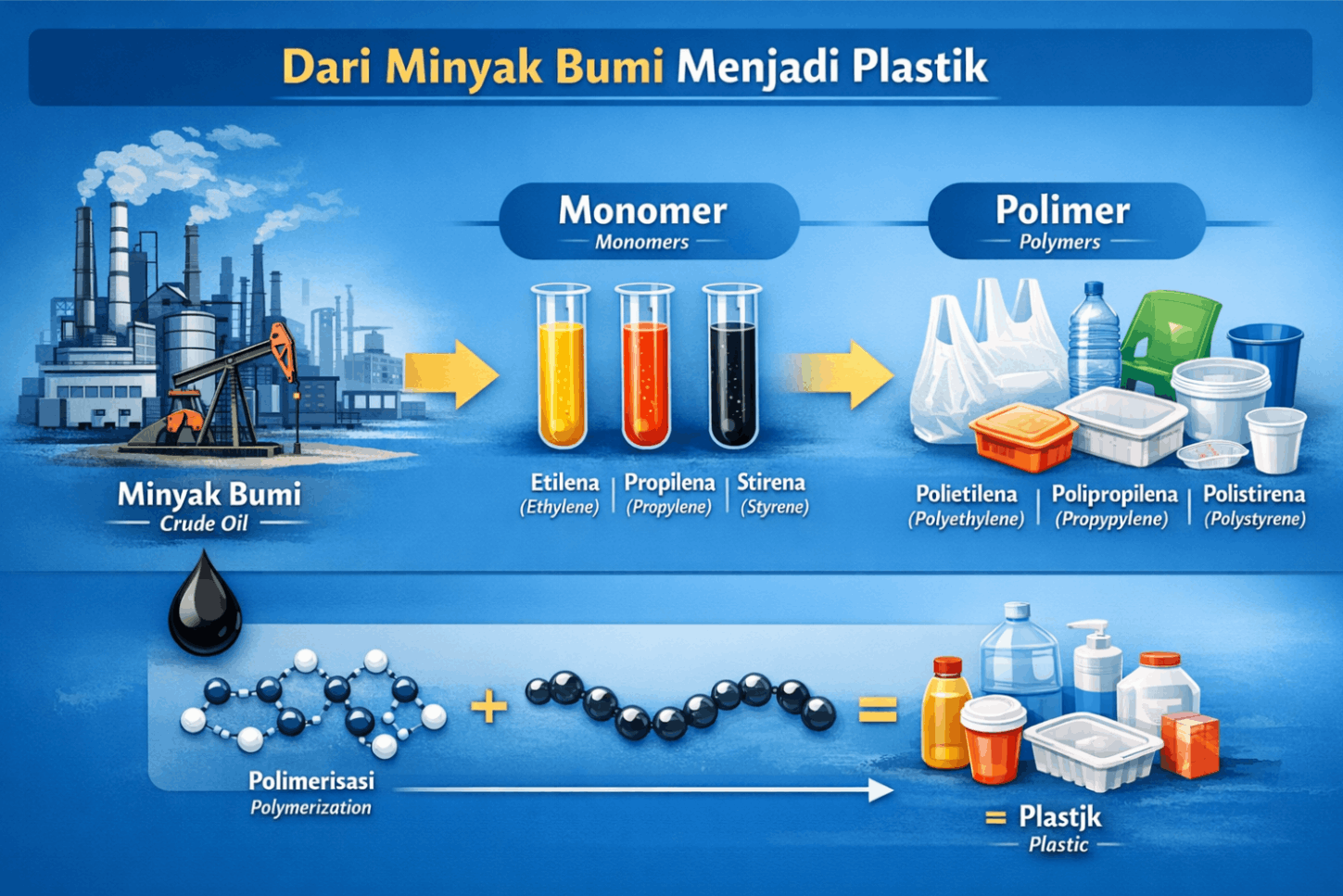
Plastics that we use in our daily lives are derived from petroleum. Crude oil extracted from the earth is processed in refineries into various products, including petrochemical feedstocks. From this process, simple compounds such as ethylene, propylene, and styrene are produced. These small compounds, known as monomers, are then chemically linked through a process called polymerization to form plastics such as polyethylene (PE), polypropylene (PP), and polystyrene (PS) (Andrady & Neal, 2009).
On the other hand, fuels such as gasoline and diesel are also derived from the same crude oil. This means that when global crude oil prices increase, the impact is not only felt in fuel prices but also extends to plastic raw materials. In certain conditions, the price of plastic feedstocks can even surge by up to 80–90% (Kontan, 2026).
In addition to raw materials, the production of plastics requires a significant amount of energy. Industrial machinery used in plastic manufacturing relies on heat and electricity to process materials into finished products. When fuel prices rise, energy costs typically follow. As a result, the overall cost of plastic production increases (Hopewell et al., 2009).
Another often overlooked factor is distribution. Plastics are manufactured in factories and then transported to various regions using fuel-powered vehicles. When fuel prices increase, transportation costs also rise, which ultimately pushes plastic prices even higher (SumatraKini, 2026).
Taken together, the increase in plastic prices is not caused by a single factor, but rather by a combination of interconnected elements: more expensive raw materials, higher energy costs, and increased distribution expenses.
In response to this issue, researchers have begun developing more environmentally friendly alternatives that are less dependent on petroleum, such as bioplastics made from natural materials (e.g., cassava starch). Although challenges remain in terms of cost and material strength, these innovations are expected to offer promising solutions in the future.
Written by: Muji Harsini, Chemisty Department, Faculty of Science and Technology (FST), Airlangga University